
HGH Telecom Project
Product management and work flow improvement
Timeline: November - December 2025 (8weeks)
Role: RMIT University solo student project, I as a fictional company Diamond Waters’ intern.
Problem
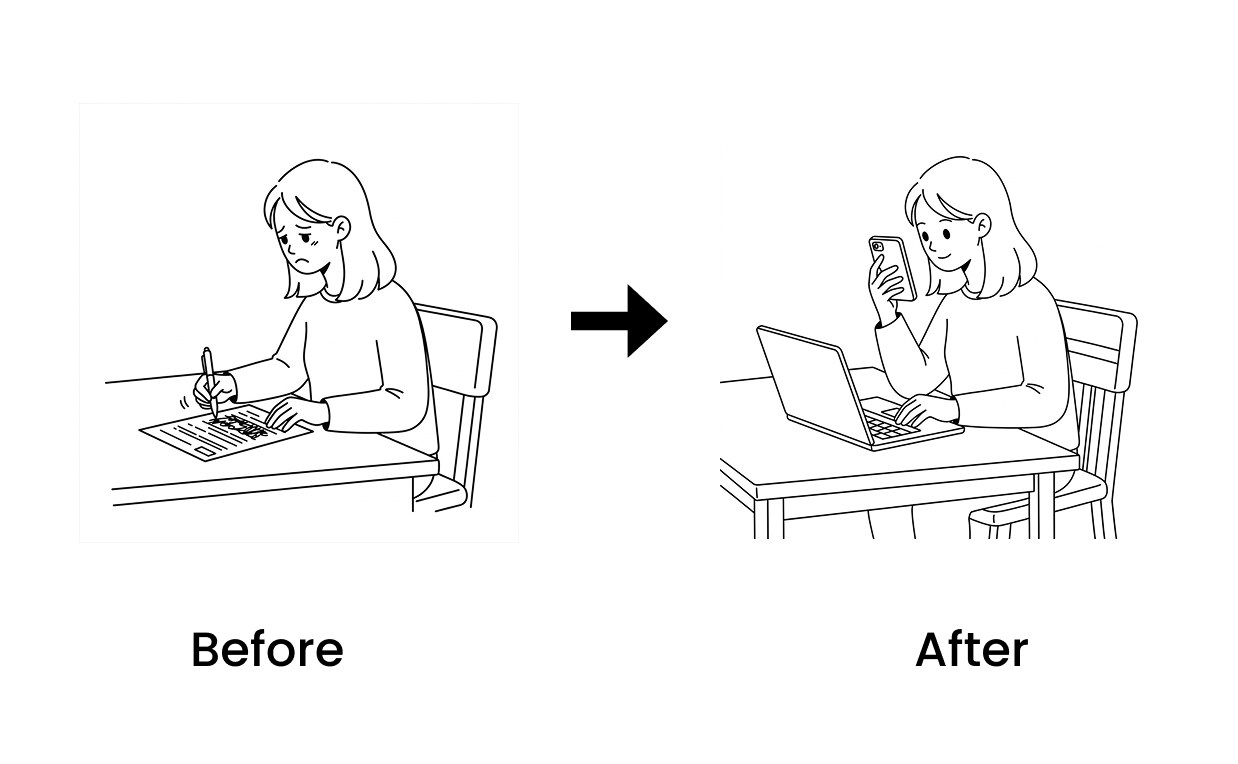
HGH Telecommunications currently collects customer leads in-store through manual forms, which are sent to the Head Office as a spreadsheet on an ad-hoc basis. This process is time-consuming, inconsistent, and prone to errors, limiting the company's ability to track interest and respond quickly. Manual forms are now outdated methods.
To improve these problems, HGH plans to introduce a new website landing page that automatically captures and organises customer interest in upcoming mobile phone plans
Solution
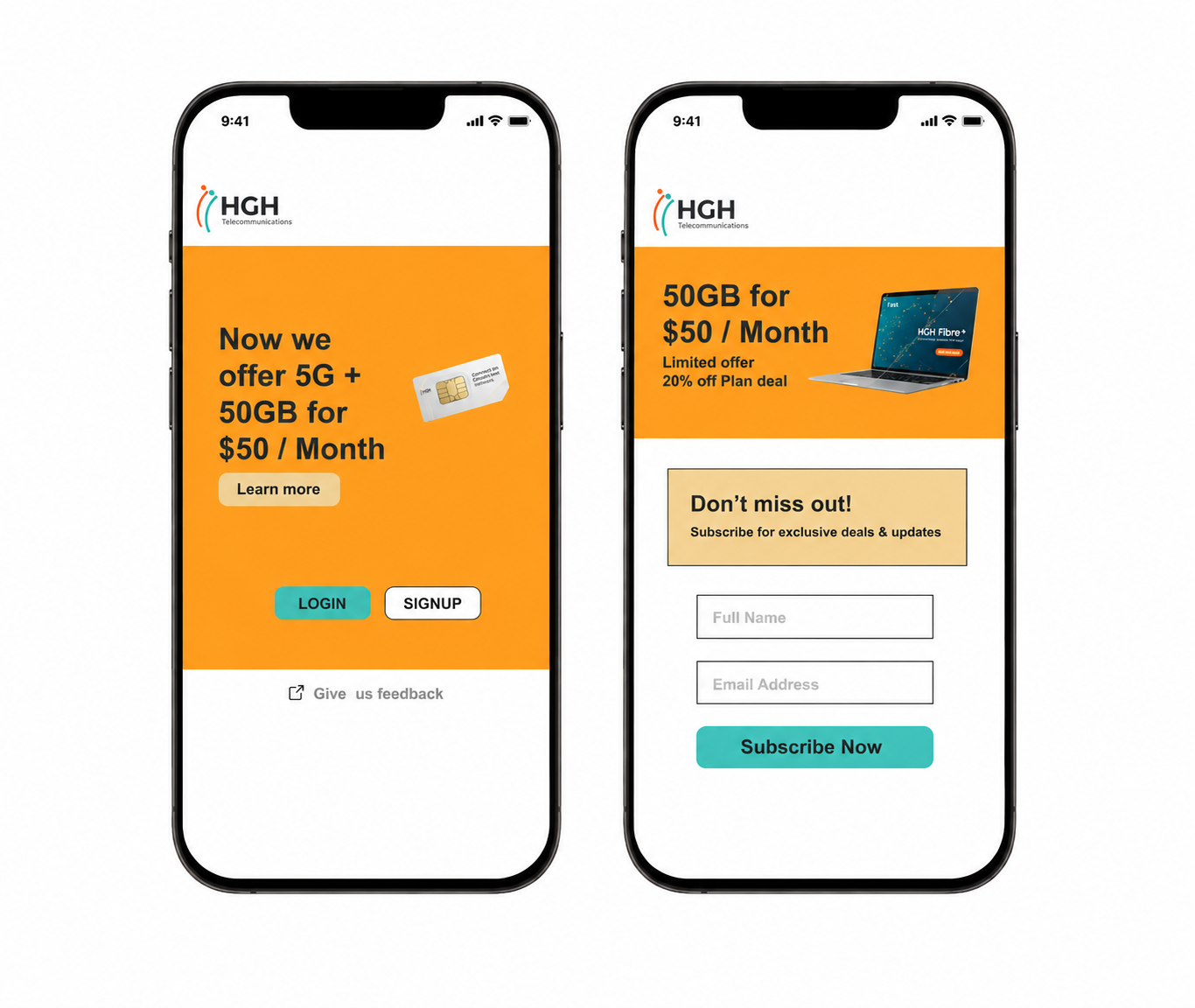
To solve this, I designed a digital landing page that automatically captures customer interest and feeds it directly into a CRM system. This replaced manual forms with a faster, more consistent experience for both customers and staff.
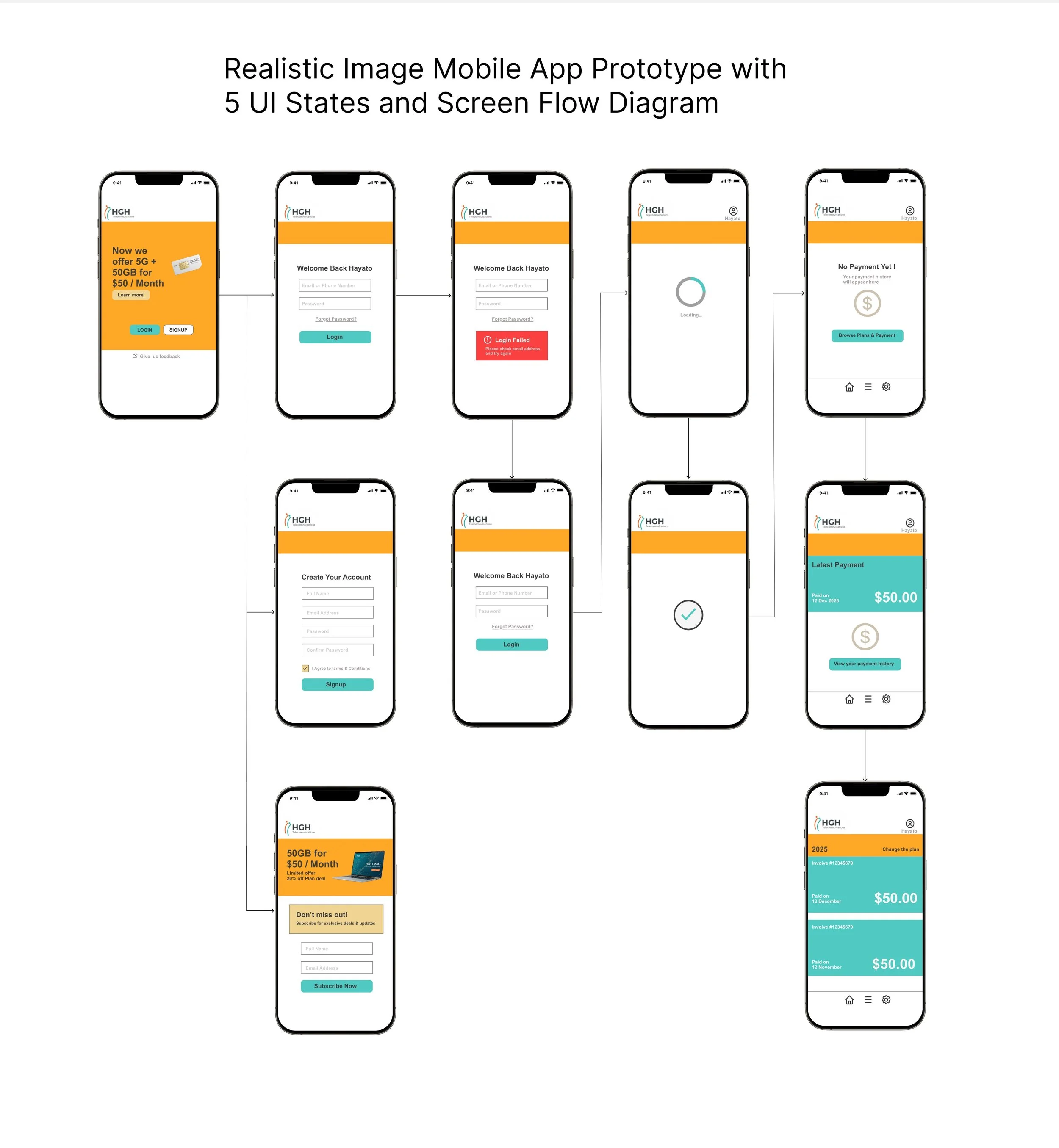
Develop website and apps to improve customers digital experience
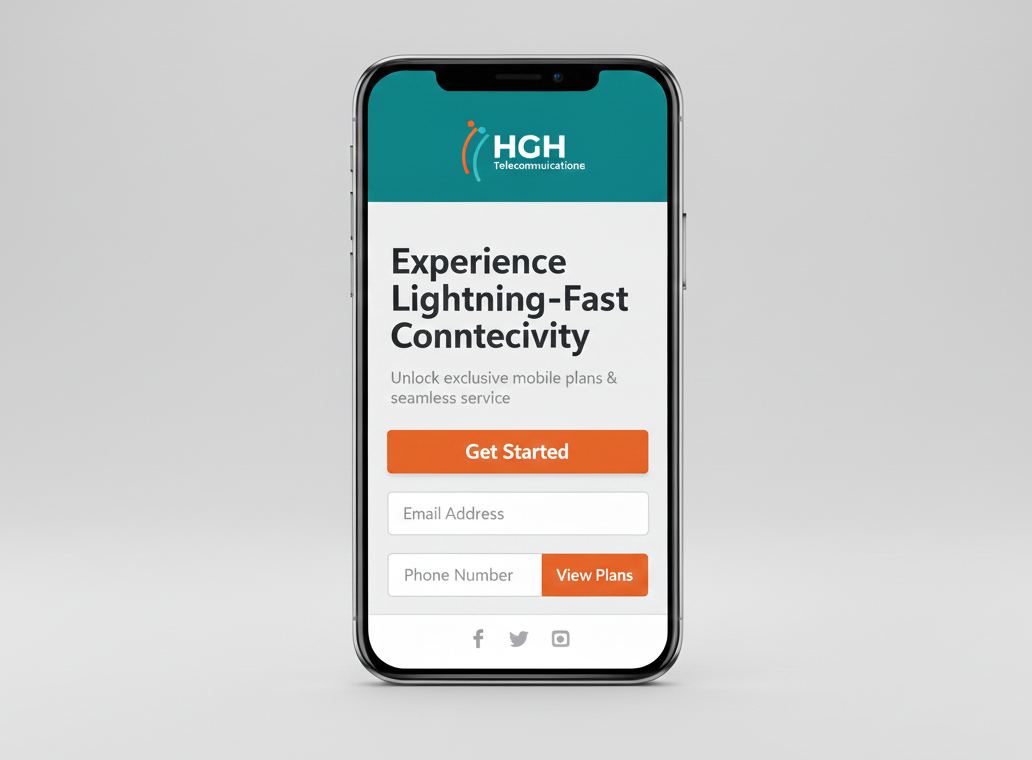
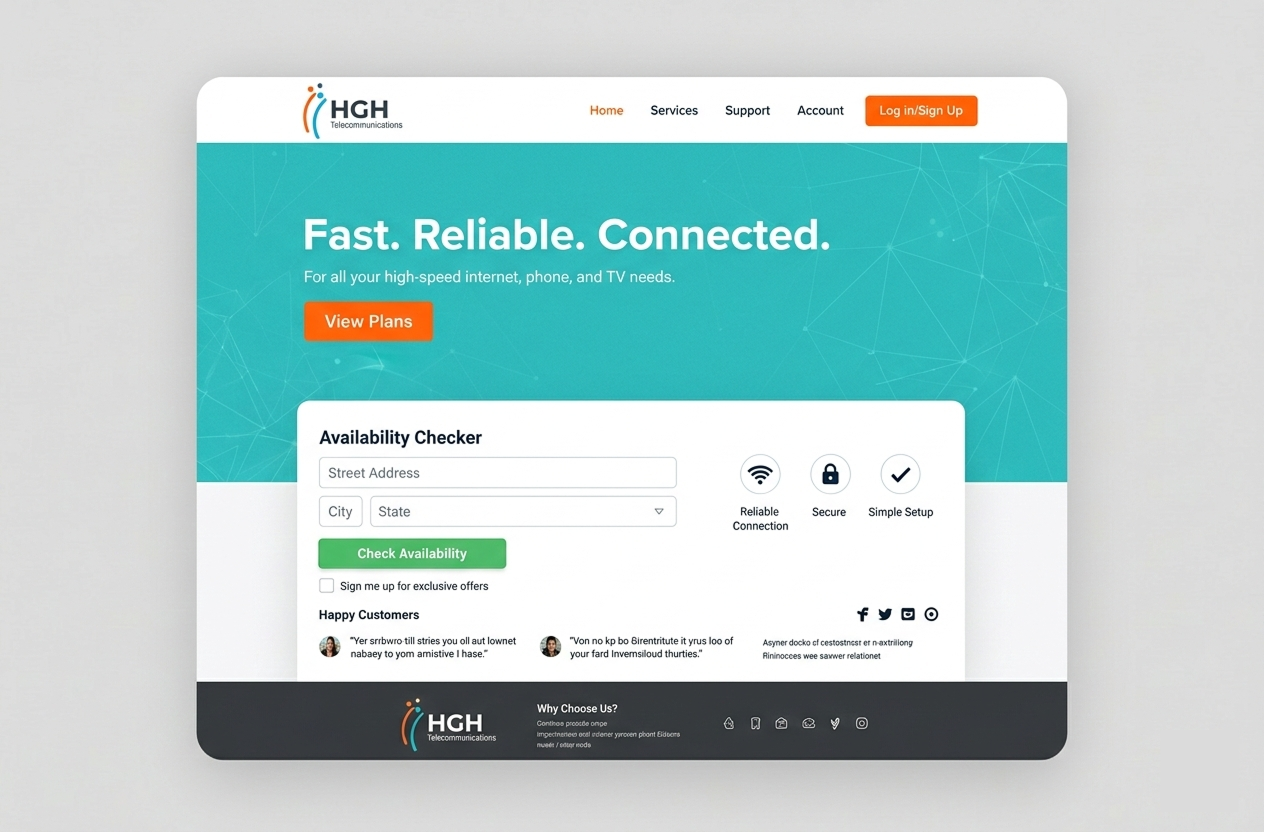
Rebuild the HGH Telecom app and website with a simplified navigation structure to reduce everyday friction for general consumers.
Introduce self-service billing and real-time usage tracking, empowering customers to manage their accounts independently.
Success Target: 40% reduction in support calls related to billing & account queries within 6 months.
CRM & Customer data management
Automatic data capture. When a customer submits their interest through the landing page, their information is instantly synced to the CRM system, eliminating the need for staff to manually re-enter data from paper forms.
Real-time visibility across locations. In-store staff and Head Office can view the same up-to-date customer information.
Reduced errors and duplicates. Because data flows directly from the landing page into the CRM without manual handling, the risk of typos, lost forms, and duplicate entries is significantly reduced. This improves the quality of leads HGH can act on.
Initial Research
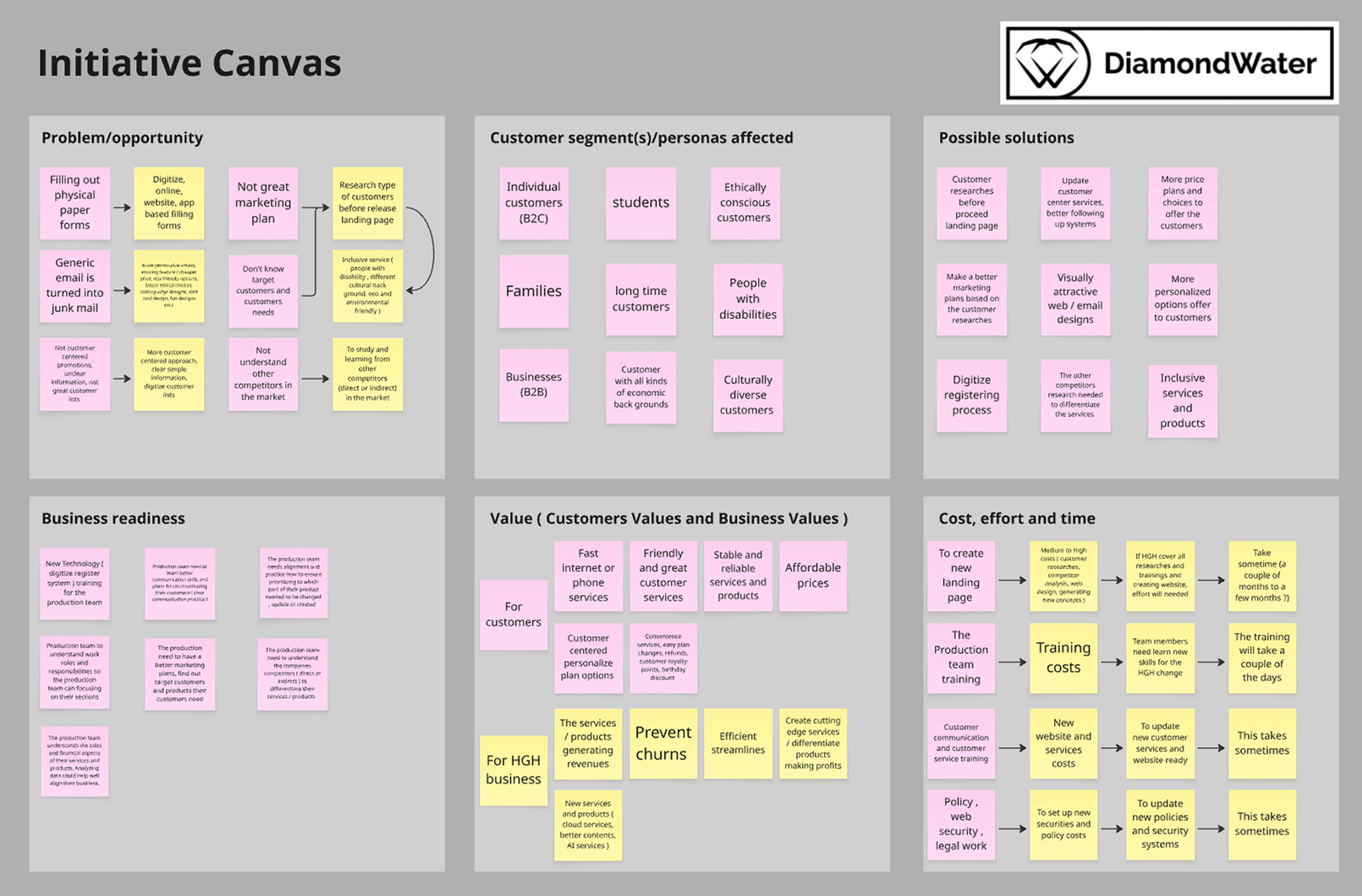
I started with stakeholder interviews to understand what HGH needed to improve. From the interviews, I mapped out the information to find patterns. Manual forms, lead capture issues, and generic messaging sending to customers were some of the pain points found.
What Stakeholders Told Us (Simulated Personas)
Nicole Bennett (Product owner for Consumer) & Tony Galarous Head of Sales
"Leads are falling through the cracks — it's left to individual agents whether they follow up at all. By the time the spreadsheet reaches me, the customer has probably already signed with Optus."
Amy Huyhn(Corporate Sales team leader), Vijay Patel(Franchisee/store owner)
"My team spends hours every week re-typing paper forms into Excel — it's pure double handling. And across my four stores, I can't guarantee every staff member is even capturing leads the same way."
Nathan Burk (Solution architect for Salesforce CRM)
"I need real-time data to respond to the market — not a spreadsheet sent whenever someone remembers. And whatever we capture needs to flow straight into Salesforce with the right fields, otherwise it's just more messy data we can't act on."
Daniella Ricardo (Head of Brand and Customer Experience)
“A generic mailing list form won't cut it — our research shows customers want to enquire about specific products, not telecommunications in general. We need to capture what they're actually interested in so we can manage inventory and promotions properly."
Research
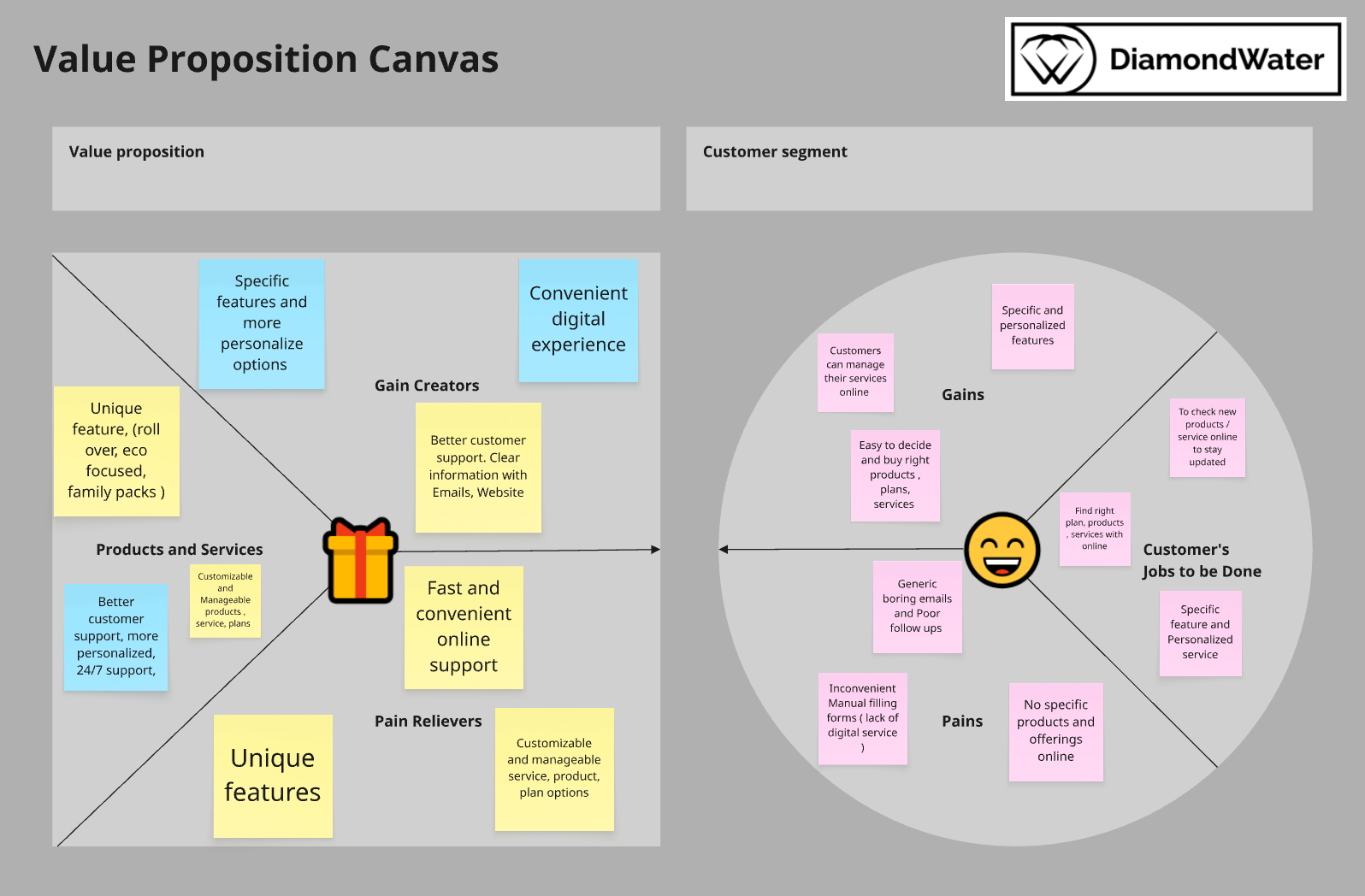
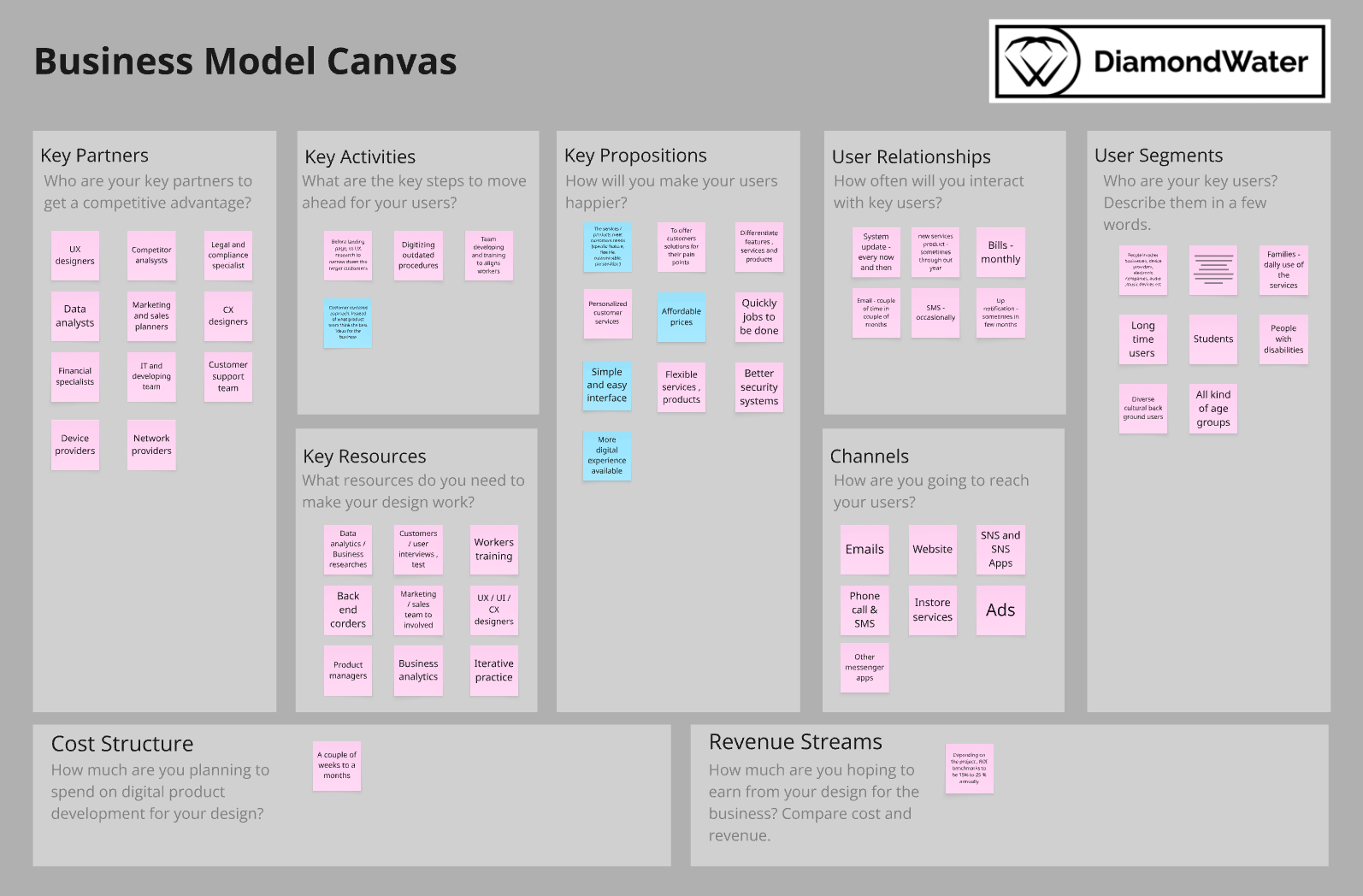
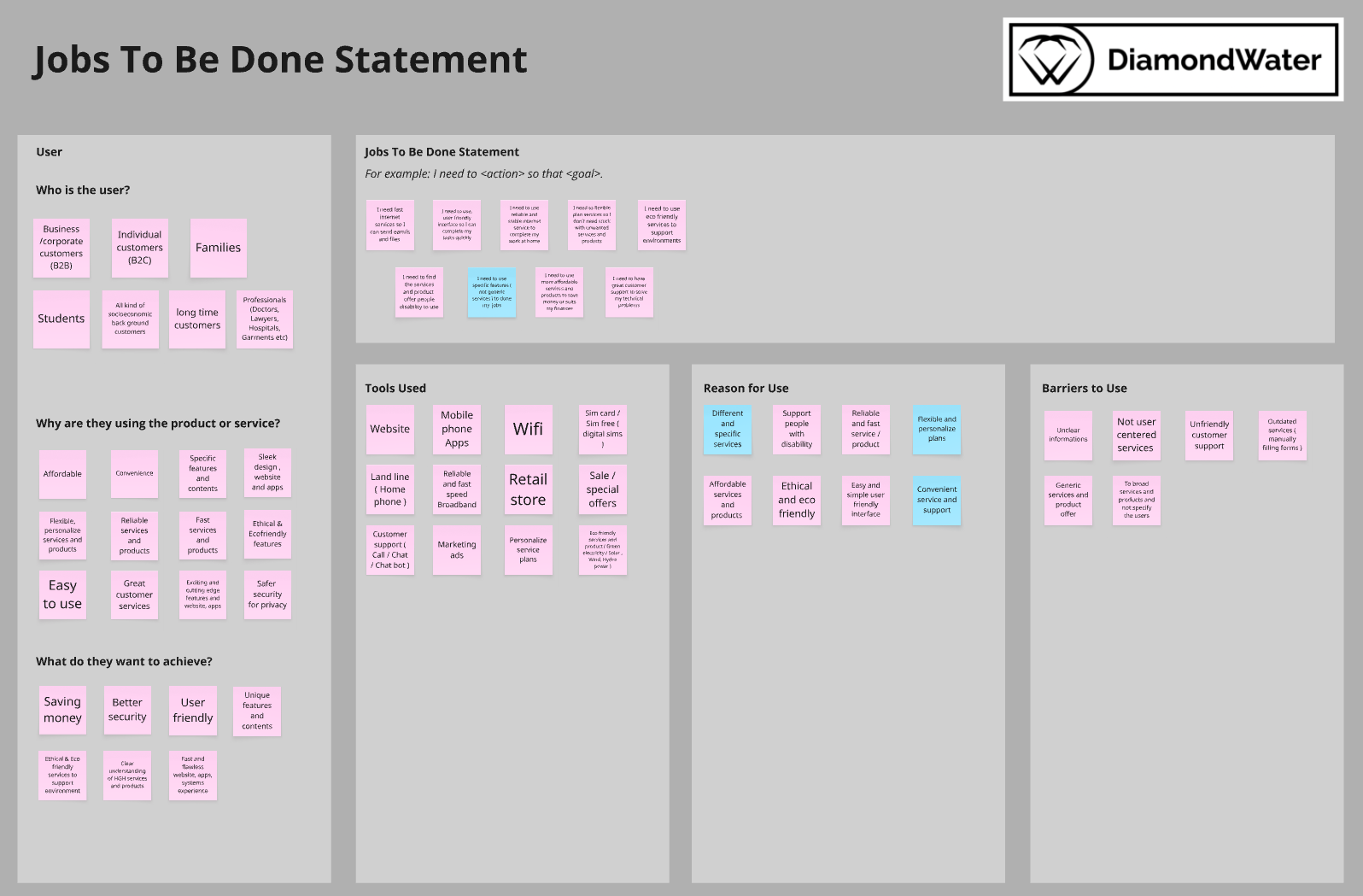
Based on the initial stakeholder interviews, I gathered further insights into HGH Telecommunications' current problems and user experiences. To make sense of this information, I mapped it out using multiple UX frameworks, and methods.
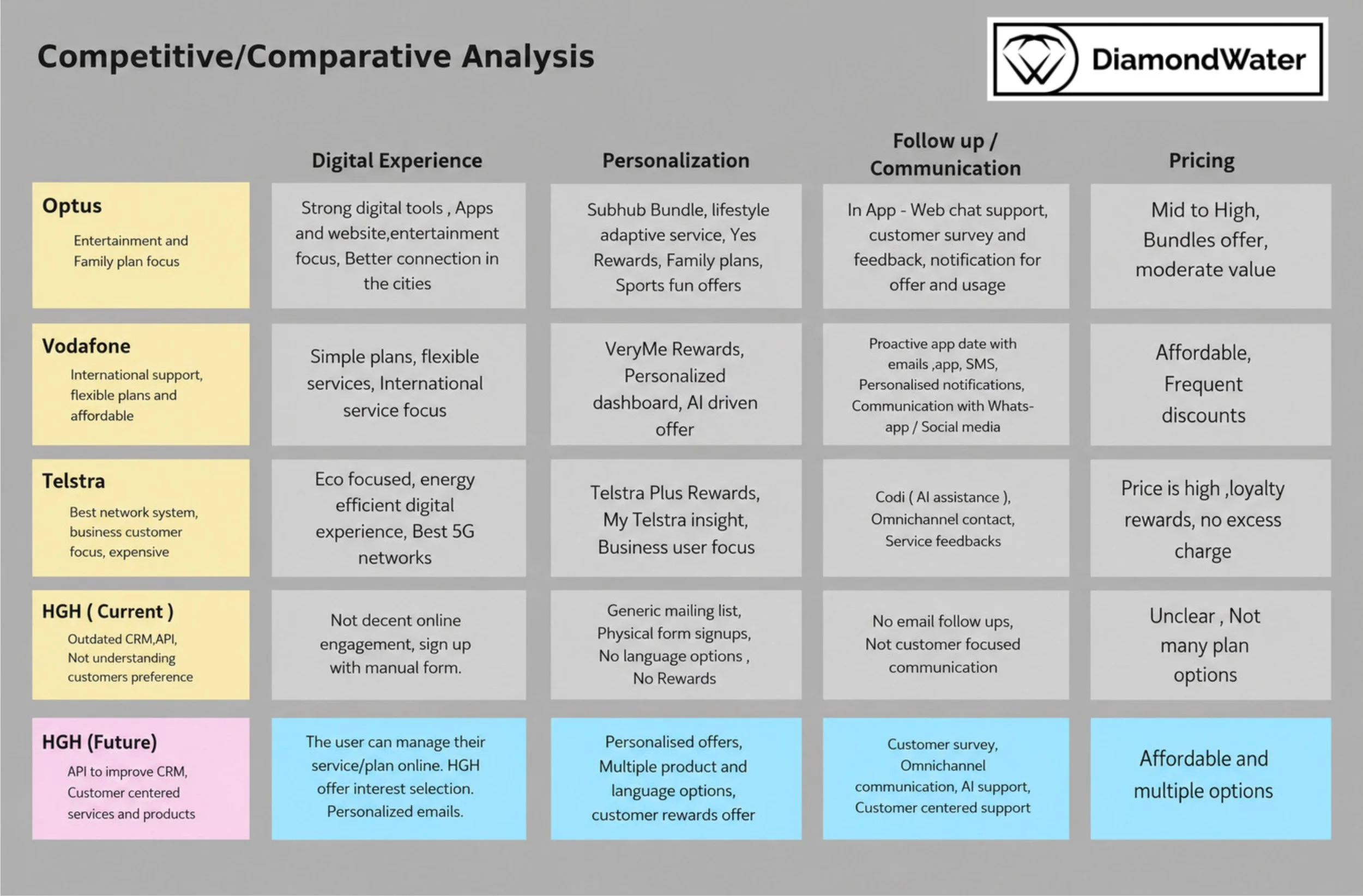
Hypothesis
We believe that replacing manual in-store forms with a digital landing page will reduce time spent on data entry for HGH staff and deliver a more modern, convenient experience for customers, because our interviews revealed that the current paper-based process is frustrating for both. Staff are overwhelmed by manual processing while customers expect to engage with brands digitally from home.
Analysis
(Painpoints summary)
I organised my research findings into 3 core pain point groups.
HGH Staff
Spending excessive time manually processing and transferring paper forms into spreadsheets
Ad-hoc submission process to Head Office creates inconsistency and extra workload
No streamlined system, making daily tasks repetitive and inefficient
Customers
Forced to register interest in-store through outdated paper forms
No option to engage with HGH digitally or from home
Expectation of a modern brand experience is not being met
Likely experiencing delayed or inconsistent follow-ups after enquiring
Head Office
No real-time visibility of customer leads coming from in-store
Reliance on ad-hoc spreadsheet submissions means data is always delayed
Difficult to track, measure, or act on customer interest in a timely manner
Data loss and errors in manual handoff create unreliable reporting
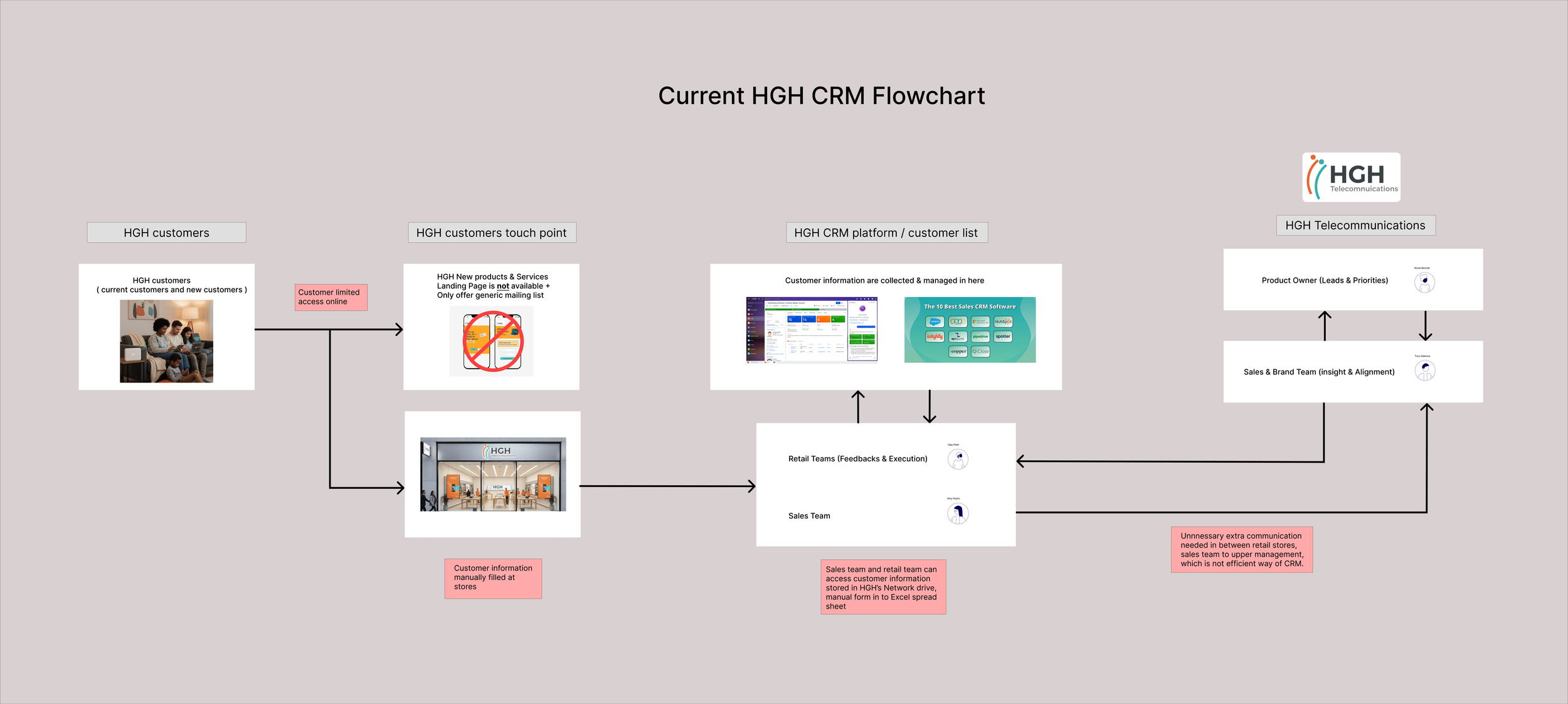
How might we (HMW)
For HGH Staff
HMW reduce the time staff spend on manual data entry and form processing?
HMW create a more consistent and streamlined way for staff to capture customer leads?
For Customers
HMW allow customers to register their interest in mobile plans from anywhere, not just in-store?
HMW create a digital experience that reflects a modern and trustworthy brand?
HMW ensure customers receive timely and consistent follow-ups after expressing interest?
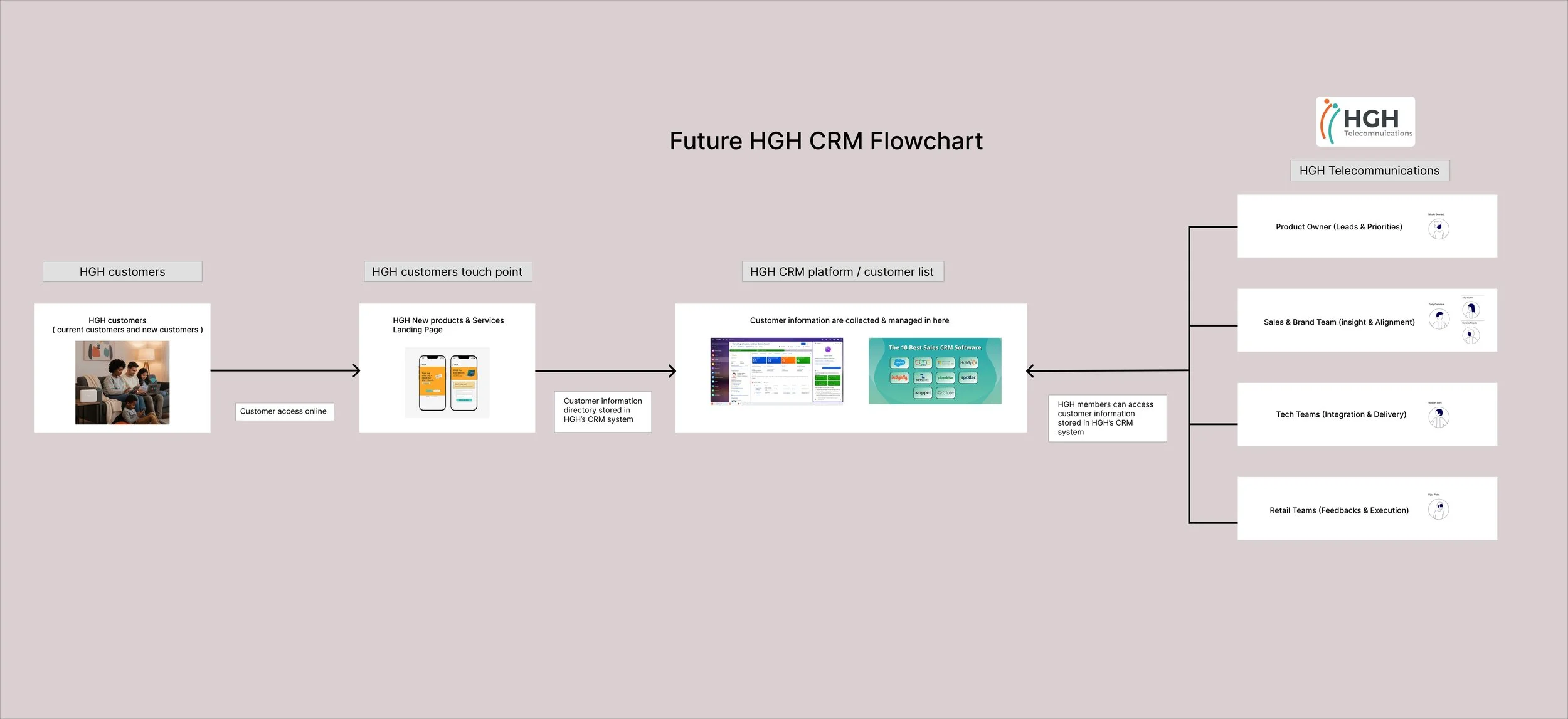
For Head Office
HMW give Head Office real-time visibility of incoming customer leads?
HMW eliminate the risk of data loss and errors in the lead handoff process?
Ideation Process
Using the HMW statements as a starting point, I explored solutions across all three stakeholders. Ideas pointed toward a digital landing page to replace the manual in-store form process. Stakeholder interviews also surfaced the need to modernise the internal CRM. This meant both the customer-facing and back-end solutions were developed in parallel.
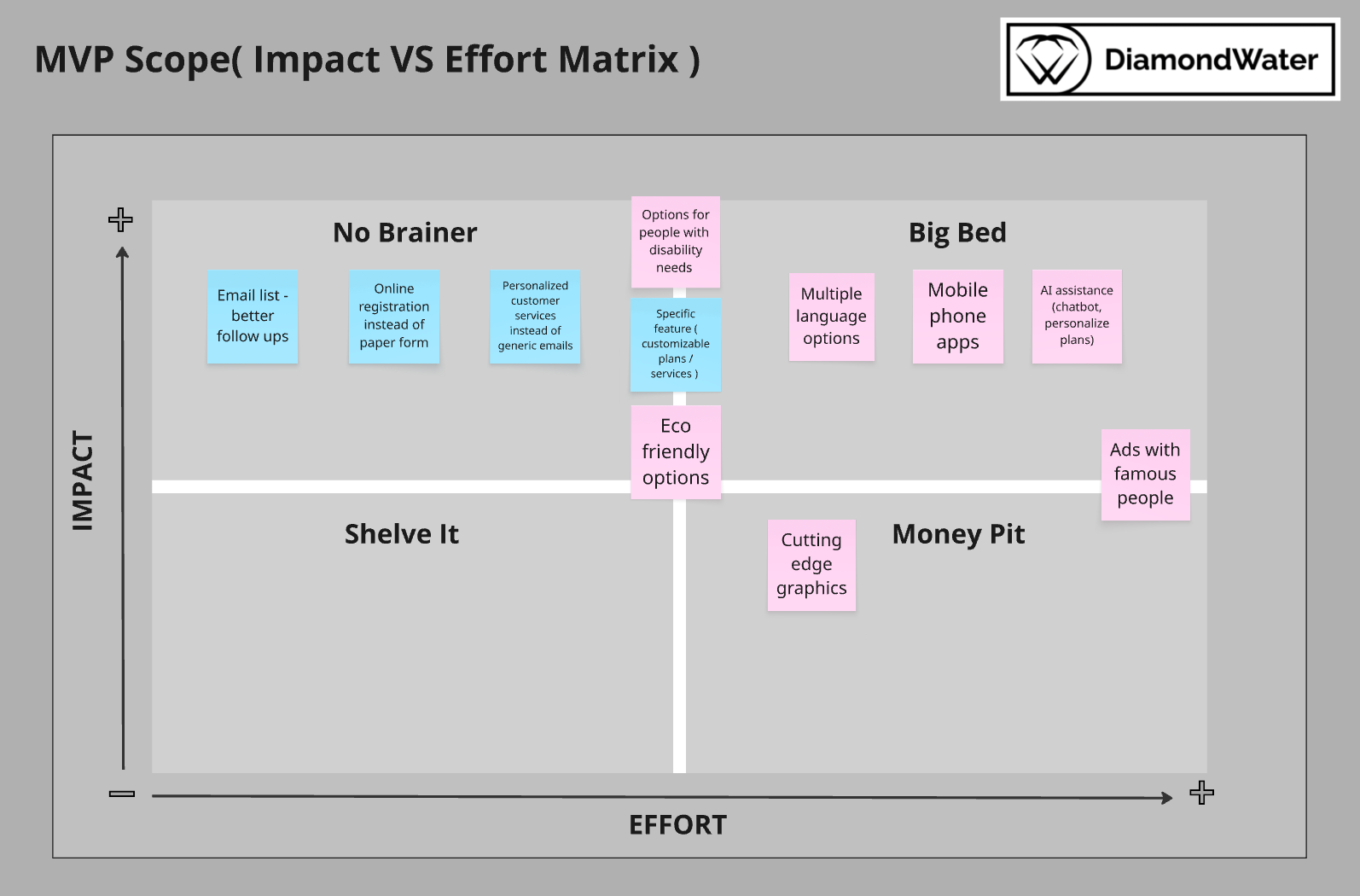
Iteration
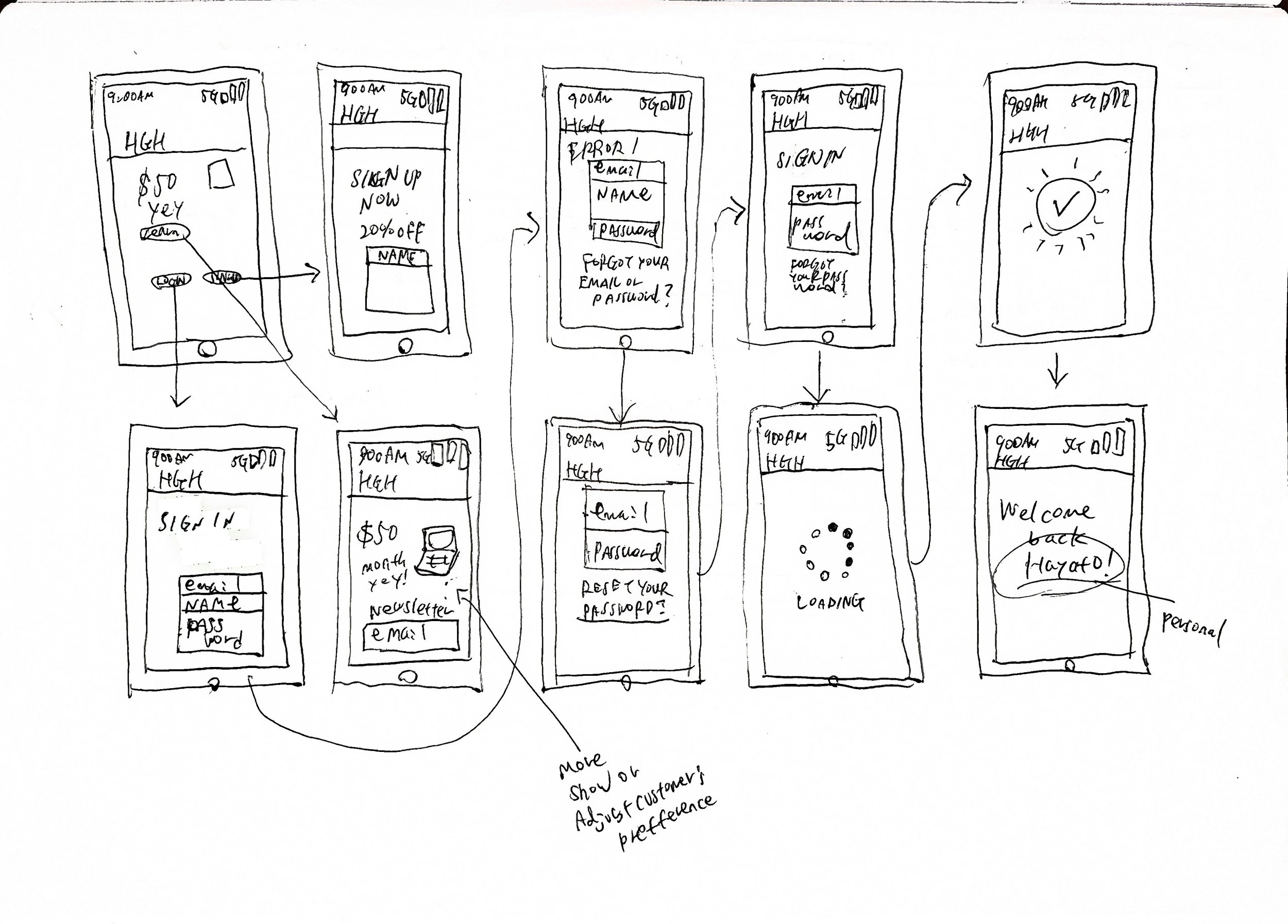
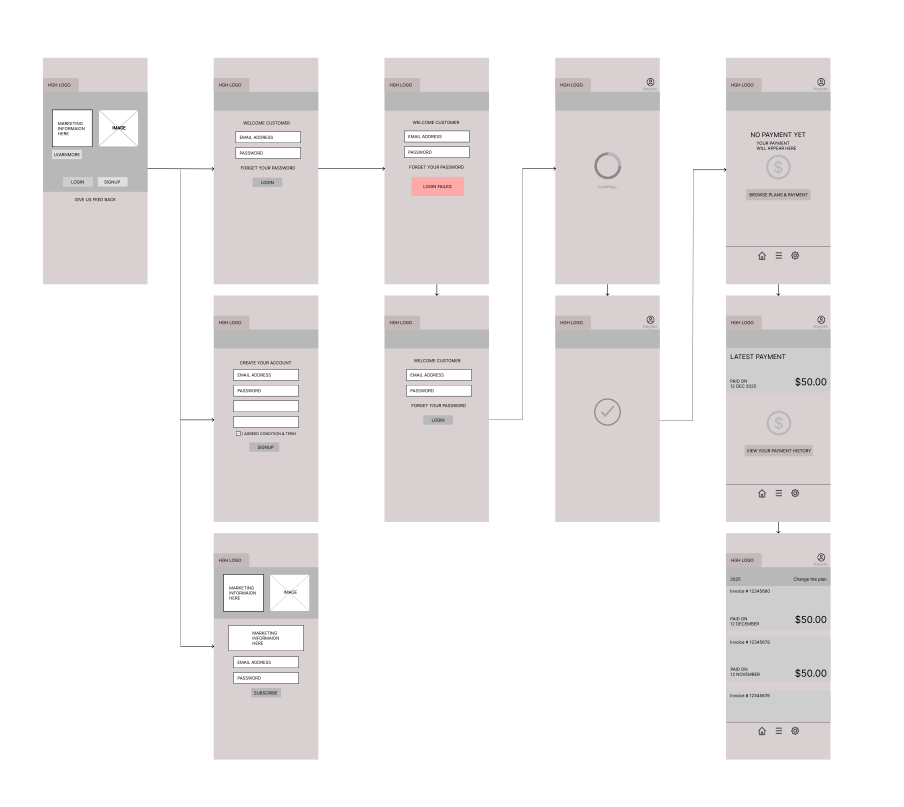
I began with hand sketches to explore layout ideas, then developed a mid-fidelity design before refining it into a clickable high-fidelity mockup in Figma. The interface was kept simple and familiar. I used standard navigation patterns like a hamburger menu and home icon to ensure the design was intuitive for users across all age groups.
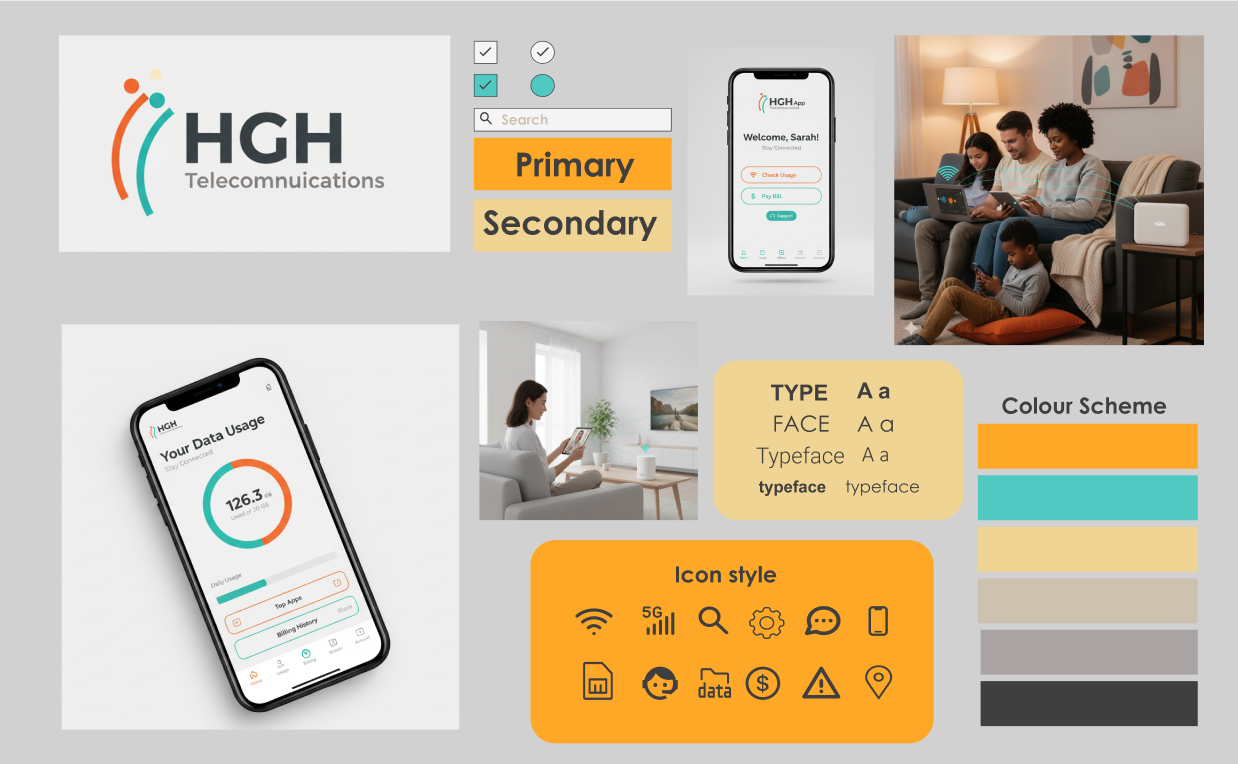
Typography and colour were chosen for accessibility. Fonts were tested for readability at smaller sizes, with contrast ratios suitable for as many users as possible.
Beyond the interface, I redesigned the internal data flow so submissions route automatically into the CRM, giving Head Office real-time visibility and removing the manual handoff that was causing delays.
Final Designs
Landing Page
Mood-board
Brand colour palette
Brand logo
Typography selection
Simplified single-screen form
Confirmation success state
Mobile phone app / Web page
CRM & Internal Workflow
CRM concept and system design
Data flow chart
End-to-end workflow visualisation
Final Designs Images
Learnings
The stakeholder interviews provided limited insights. With more time, I would have conducted additional user testing to more accurately validate the design decisions against the client's real needs.
Designing the CRM data flow and workflow concept was a valuable reminder that UX design does not stop at the visual layer. Understanding how data moves through a system and how it impacts internal workflows is just as important as the interface design itself.
What’s Next?
User Testing Conduct usability testing on the landing page and mobile app with real customers across different age groups to validate the design decisions and identify any areas for improvement.
Stakeholder Validation Present the CRM workflow and data flow concept to HGH Head Office for feedback, ensuring the back-end solution aligns with their operational needs and existing systems.
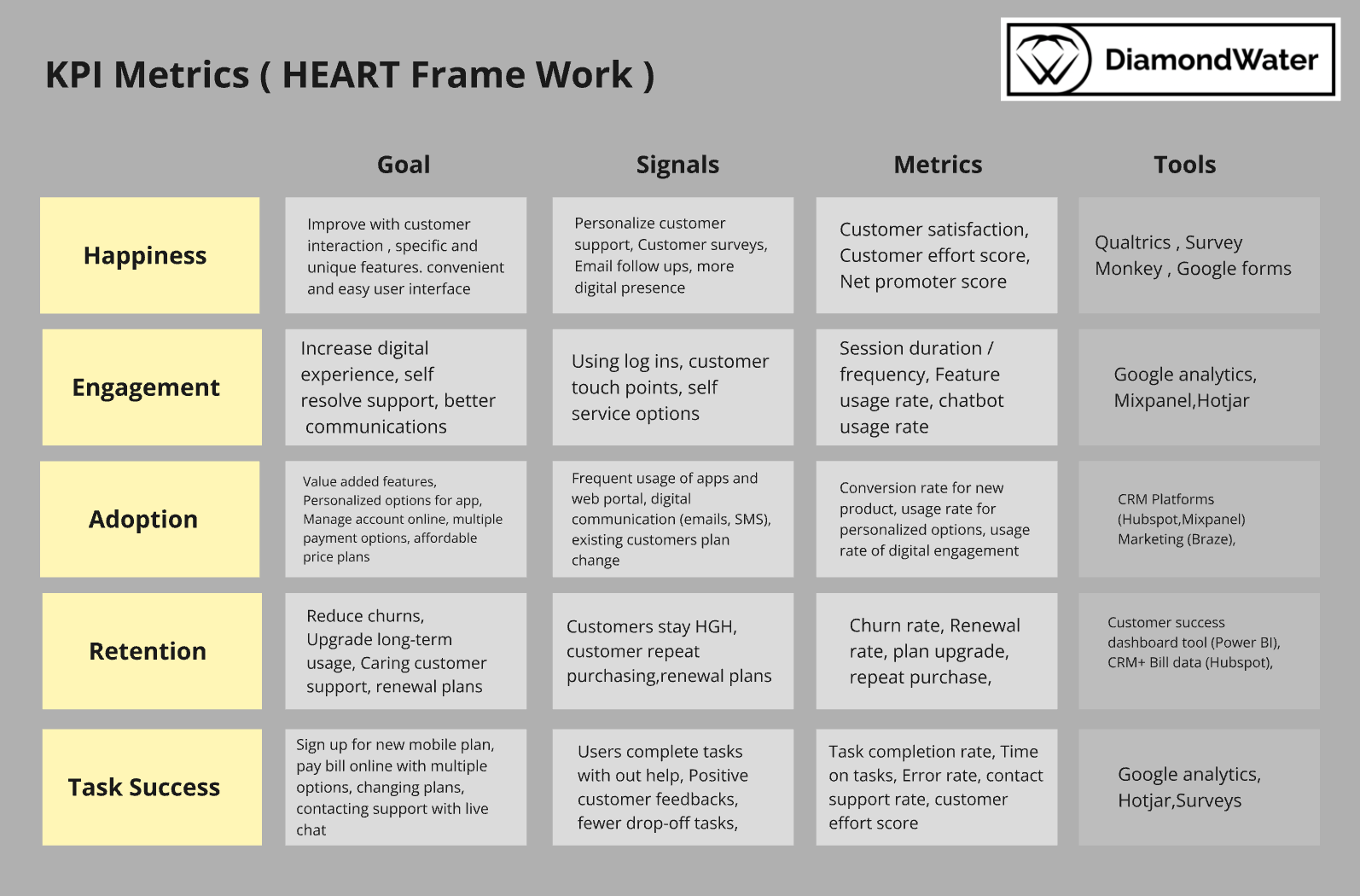
Measure & Iterate Once launched, track the HEART framework KPIs. Focus particularly on form completion rate, lead capture volume, and staff time saved, to measure the real-world impact of the solution and continue iterating based on data.